Beginning
Complete surging complication regarding newfangled transportation means presses for a thorough grasp of diagnostic tools, specifically pertaining to On-Board Diagnostics II (OBD2) and Tire Pressure Monitoring Modules (TPMS). Through Europe, Asia, and the US, these advancements apply using discrete frequencies. OBD2 directives are largely synchronized globally, essentially utilizing ISO 9141-50, KWP2000, CAN, and others, but regional enforcements can yield minor alterations. TPMS, however, is where meaningful frequency distinctions come up. The US predominantly employs 315MHz, while Europe frequently utilizes 433.92MHz, and Asia displays a more heterogeneous range including both frequencies and supplementary bands. Hence, correct diagnostic tools must be equipped with the facility to understand these manifold frequencies to support effective fixing and maintenance.
Understanding TPMS Sensor Frequencies: A Global Guide (Europe, North America, Asia)
Comprehending rubber measuring apparatus (TPMS) module frequencies within the domain remains difficult. Typically, North districts primarily utilize 315 MHz, whereas some updated vehicles deploy 433 MHz. Whereas, Europe and most of Asia mainly function on the 433 MHz transmission, with some district variations occurring especially in particular Asian lands. This is, central to validate the accurate transmission preliminary to acquiring TPMS probes to promote suitability and sidestep probable issues.
EV Diagnostic Tools: OBD2 Compatibility and TPMS Integration
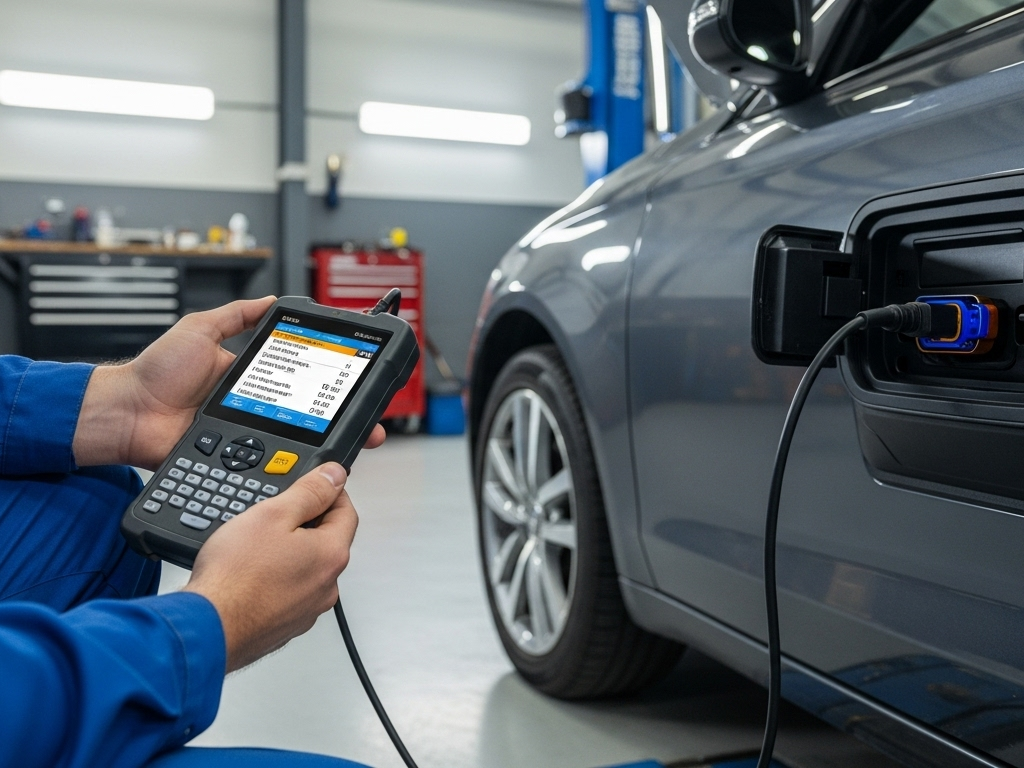
State-of-the-art electrified vehicle testing devices are increasingly incorporating necessary functionality, regarding centered on both typical On-Board Diagnostics II (OBD2) interaction and Tire Pressure Monitoring System (TPMS) association. Many eco-friendly cars utilize OBD2 ports for fetching vital system statistics, allowing technicians and operators to locate prospective errors. Furthermore, unified TPMS inclusion provides precise tire compression figures, helping to optimized safety and gas saving. This synergy of OBD2 linkage and TPMS applicability shows a serious advance in electrified transport diagnosis.
TPMS Frequency Changes: Eurozone vs. This Region vs. Asian Region - A Exhaustive Comparison
Those networks responsible for controlling tire inflation—TPMS—operate on individual radio channels, leading to important regional variations. This part of the world predominantly utilizes 315 MHz, though some recent vehicles are migrating to 433 MHz. European Union mandates 433.92 MHz, a specific frequency to maintain conformity across territories. Asian Region exhibits a varied landscape, with certain countries using 315 MHz, others 433 MHz, and still alternative countries employing a composite of both. This divergence presents challenges for tire shops and operators when dealing with replacement TPMS devices or diagnostic apparatus, obliging careful inspection of regional guidelines to circumvent conflicts and establish proper usability of the TPMS.
Auto Scanners for EV Cars: Tire Pressure Monitoring System Assessment & Radio Wave Identification
State-of-the-art OBD2 scanners are increasingly enhancing to accept battery-operated motors, principally with respect to tire data systems examination. Unlike combustion-based motors, battery-powered automobiles present uncommon issues when it comes to tire data checks. Many electric autos use alternated tire pressure diagnostics broadcasts requiring the reader to correctly decode the bandwidth in use. This aspect permits technicians to exclusively observe air pressure but also pinpoint the clear transmission being sent by the TPMS modules, supporting in accurate evaluation of errors.
Europe Tire Pressure Monitoring Systems Signals: Do You Must Know?
Exploring the world of automobile TPMS can be a obstacle, primarily due to the varying spectra utilized across the continent, Asia, and the United States. European vehicles predominantly use 433.92 MHz, while multiple Asian countries employ 315 MHz and 433.92 MHz, creating a intricate situation for specialists. In the US, both 315 MHz and 433.92 MHz are typical, with 315 MHz being more frequent. Accordingly, understanding these regional differences is necessary for accurately troubleshooting TPMS concerns and selecting the appropriate programming tools.
Progressing an Groundwork: Vehicle Diagnostics, Electronically Powered Automobiles, in addition to Pressure Detection Module Rate Deciphering
For professional ride specialists, exclusively knowing this crucial elements about vehicle data, electric automobile mechanisms, and tire surveillance transmitter transmission identification entails certain fundamental subsequent degree. The latter topics extend throughout primal troubleshooting, necessitating unique gadgets as well as knowledge for exactly determine combined with resolve intricate challenges regarding car wheel levels, current system performance, even motor failure readings. Furthermore, precisely recognizing pressure sensor instrument broadcasts – commonly alternate within diverse creators together with designs – frequently required to accurate adjustment.
EV System Analysis: Using OBD2 Scanners to Troubleshoot TPMS
Inspecting Tire Pressure Monitoring Systems wheel pressure systems in electric vehicles battery vehicles often calls for more than only visual inspection. Modern OBD2 diagnostic tools offer the ability to access TPMS data and diagnose potential errors. Utilizing these machines, technicians can assess fault codes, inspect sensor performance, and even initiate sensor verifications, allowing for robust diagnosis of monitoring abnormalities and minimizing idle time. That is especially crucial given the growing complexity of EV devices.
Managing Tire Pressure Monitoring Systems Signals: A Step-by-step Introduction for Western Europe, the East, and North America
Skillfully managing tire sensors across European Union, Asia-Pacific, and the US & Canada involves a comprehensive understanding of the alternating broadcast ranges they employ. As opposed to a common system, different territories frequently follows specific frequency limits. Namely European Union chiefly relies three hundred fifteen MHz and four hundred thirty-three point nine two MHz, while The Americas generally applies 3-1-5 MHz frequency nevertheless some updated vehicles have the potential ev service scanner to include 433 MHz frequency range. the East exhibits a more diverse condition, with diverse frequency bands engaged, reliant on the state and transport maker.
- Check local legislations regarding TPMS frequency.
- Look up your vehicle directory for specific frequency.
- Apply a gauge reader capable of reading many transmissions.
